Background
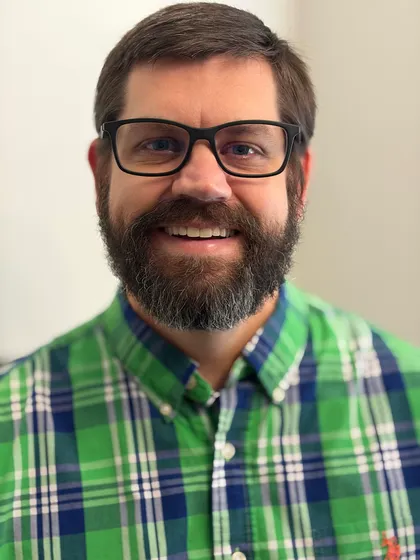
Hello, I'm Chris. Online I am The Linux IT Guy. I am an enterprise systems administrator with over 25 years in IT, from hardware repair and desktop engineering through infrastructure lead work and, for the long stretch since 2013, identity. The public work is this site and the YouTube channel . The line under the name is the scope: Linux for homelabs, sysadmins, and the rest of us.
I am not writing for a certification exam. I am writing for the person who has a spare disk, a real GPU, and a service they want on their own network. The day job is enterprise identity: Microsoft Entra, directory synchronization, Conditional Access, and the unglamorous work of keeping a hybrid directory honest. The lab is where I keep the Linux habits that job does not always leave room to teach. Career dates and employers are on the experience page . This page is what the site is for.
What I cover
The distributions I actually install show up as written guides, not as a logo wall. Fedora Workstation, the XFCE spin, and Silverblue. Fedora CoreOS when the machine is an appliance. Alpine when the hardware is old and the job is small. Arch, both from scratch and as Omarchy. Linux Mint when someone wants an Ubuntu LTS desktop with Cinnamon. Rocky when the story is a RHEL rebuild and NVIDIA. Pop!_OS when the desktop itself, COSMIC, is the thing worth documenting.
Homelab services are the other half. Pi-hole and AdGuard Home for DNS, Jellyfin for media, and a reverse proxy or WAF when an app should not sit on the open internet with a default password. Containers follow the host. Docker Compose is the right tool on Alpine and on a normal VPS. Podman Quadlets are the right tool on Fedora CoreOS, because systemd should own the restart and I should not be SSH'd in to re-run a command after a reboot.
The project pages are the things I keep in git. The posts are the procedures. If you are new, start with the guides on the homepage , then open a tag when you already know the topic: Omarchy , Fedora , CoreOS , Alpine , Arch , Linux Mint , Docker , and Podman .
How a guide gets written
I do the install on hardware or a VM I can break. I keep the commands in the order I ran them. I write the paragraph that explains why the flag exists, because a paste-only post is how people leave nomodeset on a daily driver and then blame the GPU. If a vendor publishes a checksum, I print it and name the release it belongs to. If a later ISO replaces that file, the checksum next to the download wins. A blog is a bad place to pretend an old hash still describes today's image.
I do not publish frame rates, boot-time leaderboards, or memory tables I did not measure on the machine in front of me. Comparison posts say which box I would pick and why. They do not borrow someone else's overlay percentages. When a number matters, it is a version, a port, a timer, or a checksum, and the post says where it came from.
The channel videos are the same topic with a screen. Watch the video if you want to see the installer move. Use the post if you want the command six months later, when the description box has been crushed by YouTube and you cannot grep a thumbnail. If the two disagree, I fix the post. The written guide is the reference. The video is the companion.
Failure modes get their own section, and sometimes their own article. A black screen on the Omarchy ISO is not a footnote on a distro comparison. A broken AUR package for Resolve is not a one-line "install yay." I would rather you bounce to the narrow post than scroll past the one command that saves the afternoon.
How the lab is split
The desk is a daily-driver Linux desktop. Lately that is Omarchy when I want Hyprland without building it from the wiki for the fifth time. Fedora is the release I trust for a jumphost and for anything that should still boot after a month of ignoring it. Fedora CoreOS is the appliance: DNS, declared with a Quadlet, and not much else. Alpine is the tiny box, an old laptop that should run Pi-hole or Jellyfin and then stay out of the way.
I do not put a tiling desktop on the DNS server. I do not put CoreOS on the machine I edit video on. That split is the whole site. If a guide seems to ignore a tool you like, it is usually because that tool belongs on a different machine, and another post already covers it.
How to reach me
Questions about a guide, corrections, and business notes go to thelinuxitguy@gmail.com, or through the contact page . I read them. I cannot debug an entire rack from an email. A pasted error and the post you were following is enough for me to tell you whether the guide is wrong.
Sponsorships and collaborations are the same address. If you want a topic covered, name the distro, the hardware constraint, and what you already tried. That is a better pitch than "do a video on Linux."