Linux for homelabs, sysadmins, and the rest of us
I'm an IT professional and tech content creator with over 25 years of experience in system administration, Linux distributions, open-source software, and homelabs.

Read the guide, then watch the video
The videos are how I show a desktop. The posts are how you repeat the work after the video is over. I keep the written guides in front because a thumbnail cannot hold a kernel parameter, a Quadlet unit, or the checksum on an ISO. If you only have ten minutes, pick one guide below and read it on the machine you are about to change.
Omarchy 4 Quattro is the current daily-driver series. The first-week install guide is the procedure: the USB, Limine, the update menu, and the tweaks I make before I trust the session. The Fedora 44 comparison is a different page. It is the decision, for when you are still choosing which disk gets which OS. NVIDIA black screens, the Bibata cursor, DaVinci Resolve, and a tarball IDE each have their own post, so this page does not pretend one article covers all of them.
The rest of the lab is split on purpose. Fedora 44 XFCE is the lightweight daily driver when I do not want Hyprland. Mint 22.3 versus Fedora 44 is the long-support versus six-month argument. Fedora CoreOS and Podman Quadlets is the appliance path for DNS. Alpine is the old laptop: Pi-hole or Jellyfin, a small disk, Docker, then leave it alone. Arch from scratch is still here for the NVIDIA workstation build. Omarchy did not replace that post. It means most people should not start there.
Omarchy 4 Quattro, first week
ISO, encryption, Limine, the first update, and the troubleshooting map. Companion to the Quattro videos, not a second copy of the Fedora comparison.
Quattro or Fedora 44
Which homelab box should be a rolling Hyprland desktop, and which should stay on a six-month Fedora release.
Fedora 44 XFCE
A light daily driver on Fedora's kernel and DNF, including when Silverblue or Mint is the better small-machine OS.
CoreOS, from Ignition to AdGuard
Bitwarden SSH keys, Butane, and a Podman Quadlet. This is the DNS appliance, not a desktop.
Alpine Pi-hole on an old laptop
setup-alpine, the community repo, and Docker Compose when the hardware should only block ads.
Mint 22.3 or Fedora 44
Cinnamon with support through 2029, or this year's Fedora. A decision guide, not a fake winner.
Latest posts
These are the eight newest posts, newest first. The cards are summaries. Open the post for the commands, the failure mode, and the order I actually ran things. A date on a card is the day I published it, not a promise that the distro froze in place.
The Quattro first-week guide sits at the top when you are installing that desktop. Older cards stay because a CoreOS unit file and a Mint comparison do not expire just because a new shell shipped. If you want a topic instead of a date, the tag index groups the same posts. The longer maps are on Omarchy, Fedora, CoreOS, Alpine, Arch, Linux Mint, Docker, and Podman.
NVIDIA Graphics on Omarchy / Arch: Daily-Driver Setup Guide
Get a real NVIDIA stack on Omarchy or Arch after install: proprietary versus open kernel modules, the pacman path, nvidia-smi checks, Hyprland and Wayland notes, and the black-screen pitfalls that belong on the nomodeset post instead of your daily cmdline.
Omarchy 4 Quattro: First-Week Install and Setup Guide
A first-week install and setup guide for Omarchy 4 Quattro: the ISO, Limine, the first update, essential tweaks, and where to look when the desktop misbehaves.
Is Fedora 44 XFCE a Strong Lightweight Daily Driver?
Fedora 44’s XFCE spin is the ThinkPad-from-2016 daily driver: Fedora’s kernel and DNF without GNOME’s RAM personality. This is an install-and-tune guide covering X11 versus the testing Wayland session, RPM Fusion, and when Silverblue or Mint is the better light OS. No fake RAM tables — your 8 GB machine is not my 8 GB machine.
Linux Mint 22.3 vs Fedora 44: A Decision Guide
Linux Mint 22.3 Zena is Ubuntu 24.04 LTS with Cinnamon and support through 2029; Fedora 44 is this year’s kernel and desktop with a six-month fuse. This decision guide covers kernels, Snap versus DNF, homelab overlap, and what to try on a spare disk. I will not declare a universal winner.
Omarchy 4 Quattro vs Fedora 44: Which Homelab Daily Driver?
Omarchy 4 Quattro is DHH’s opinionated Arch + Hyprland desktop; Fedora 44 is a six-month release with GNOME, KDE, XFCE, and atomic spins. This is a homelabber’s map of install day, updates, GPU and VMs — not a fake FPS bake-off. I also spell out who should pick which, and why the honest answer is often both.
Running Omarchy vs Windows 11 on the Same Class of PC
Same class of PC, two operating systems: Windows 11 as it actually ships in 2026, and Omarchy as an Arch daily driver. I walk through dual-boot, NVIDIA, gaming and anti-cheat, Resolve codecs, and work apps — no invented snappiness percentages. The point is what to test before you wipe a BitLocker disk.
Omarchy vs CachyOS: Which Arch-Based Path Fits Whom?
Omarchy and CachyOS both skip a from-scratch Arch install, then diverge: Omarchy ships a finished Hyprland/Quickshell workstation, CachyOS ships tuned kernels and a desktop you choose. I compare install philosophy, gaming, and maintenance without scraped benchmark tables. The wrap-up is who should pick which, and when vanilla Arch is still the right call.
Pop!_OS COSMIC Desktop in 2026: Install Notes and Frosted Glass
Pop!_OS 24.04 LTS ships System76’s Rust-based COSMIC desktop, not GNOME with a skin. These are install notes plus a walkthrough of Frosted Glass in COSMIC 1.3 — NVIDIA versus Intel/AMD ISOs, what still is not GNOME, and how this differs from Fedora’s COSMIC images or Omarchy’s Hyprland.
Latest videos
Each video has a written companion above. If you already watched the Omarchy 4 episodes, keep the first-week guide and the Fedora comparison open next to the player. The captions under the thumbnails say what that episode covers, so you are not picking from titles alone.
 21:51
21:51 COSMIC Desktop Showdown: AstrOS (Arch) vs Fedora Atomic
The COSMIC desktop on two very different foundations: Arch-based AstrOS against Fedora Atomic. Install, daily driving, and which approach fits which kind of user.
 16:02
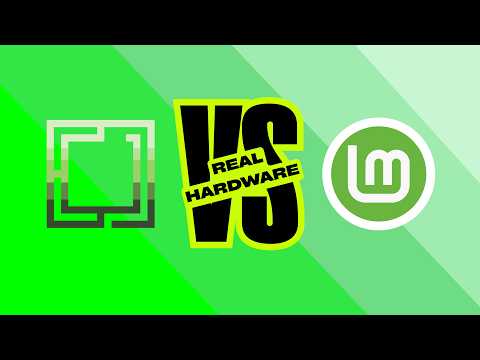
16:02 Omarchy vs Linux Mint: REAL Hardware... Here's What Happened
Omarchy against Linux Mint on real hardware: install, daily driving, and where each one actually wins. No VM shortcuts — both desktops on the same class of machine, tested the way you'd actually use them.
 23:31
23:31 Omarchy 4 vs Ubuntu 26.04.1: Which Linux Distro is RIGHT for YOU?
Omarchy 4 Quattro versus Ubuntu 26.04.1: the rolling Hyprland desktop against the LTS. Who should run which, and what to try before you commit a disk.
 25:05
25:05 Omarchy 4 Quattro vs Fedora 44: Full Linux Comparison (Install, Performance, Benchmarks)
Side-by-side of Omarchy 4 Quattro (Arch + Hyprland + Quickshell) and Fedora 44 (six-month cadence, GNOME/KDE/XFCE). I walk through install day, updates, GPU and video apps, and which homelab box should be which OS — not a fake FPS bake-off.
 25:35
25:35 Omarchy vs CachyOS: Which Arch Distro Is Right for YOU?
Both skip a from-scratch pacstrap, then diverge: Omarchy is a finished Hyprland workstation, CachyOS is performance-minded Arch with a kernel menu and a desktop you choose. This one is about who should pick which, and when vanilla Arch is still the adult option.
 15:57
15:57 I put Omarchy and Windows 11 on Identical PCs (Windows Lost)
Same class of PC, two operating systems: Windows 11 as it actually ships, and Omarchy as a daily driver. Dual-boot, NVIDIA, gaming and anti-cheat, Resolve codecs, and what to test before you wipe a BitLocker disk.
Recent projects
Omarchy Q2DM1 Theme
A custom Omarchy theme color-matched to Quake II’s Q2DM1 (The Edge): industrial greens, rusty steel, and a high-visibility terminal. Install from the repo URL and switch to it with the Omarchy theme overlay.
CoreOS Infrastructure
Butane YAML and Podman Quadlet templates for turning a VM or old box into a Fedora CoreOS appliance. Start from a minimal SSH-only config, or bake AdGuard Home into Ignition so DNS is up on first boot.
Toolbox
A Rust desktop app for installing native packages and Flatpaks, running one-click admin recipes, and glancing at system info — without a different cheat sheet on every distro. Built for Arch, Debian/Mint, Fedora, and rpm-ostree hosts.

Chris, The Linux IT Guy
I'm an enterprise IT systems administrator and technology enthusiast with over 25 years of professional experience managing, configuring, and scaling computer systems, networks, and server infrastructure.
My goal with this website and my YouTube channel is to provide honest, practical, and in-depth educational resources for Linux enthusiasts, sysadmins, and homelab builders of all experience levels.
The About page is the longer version: what I cover, and how a guide gets written. Experience is the career and the method, including why a CoreOS DNS box and an Omarchy desk stay on different machines.
The journey so far
I joined YouTube in October 2023. Since then I've published 119 videos of hands-on tutorials, distro reviews, self-hosting walkthroughs, and practical advice for Linux users and IT administrators.
What I cover
Linux enterprise distributions, server virtualization, container management, infrastructure automation, and network security.











Brands I've worked with
Trusted companies and software tools that have supported The Linux IT Guy channel and content.
 off camera
 When the camera's off
When the camera's off, I'm canoeing with the boys.
Let's work together
If you want to get in touch with me about something or just to say hi, reach out on social media or send me an email.